Confessions of a Tech Hiring Manager: Why I Ignore 4.0 GPAs
Your Child Has a 4.0 GPA. So Does Everyone Else. Here is What He Needs Instead.

Author: Masaru @ The Engineering Dad Reading Time: 5 Minutes
I want to take off my “Parent” hat for a moment and put my “Hiring Manager” hat back on.
My standards for what makes a good engineer were forged early in my career at Toyota Robotics, where I managed industry research collaborations with labs at MIT and CMU. That world was brutal, precise, and practical.
But my “Reality Check” on the college admissions game happened years later, when I became the Associate Director of Research IT at a major Children’s Hospital.
I remember one specific week hiring for a junior role. I had a physical stack of about 150 resumes sitting on my desk.
I did a quick scan.
130 of them had a GPA above 3.8.
100 of them were from “Target Schools.”
Almost all of them listed “President of [X] Club” or “Member of [Y] Society.”
And do you know what I did?
I ignored the GPA. I ignored the clubs. I applied the “Toyota Test”—the instinct I developed years earlier to spot who could actually survive in a lab.
We call it the “Builder Mindset.” And unfortunately, most high school students (and their parents) are optimizing for the exact opposite.
The “Shadowing” Trap
Every year, I would get dozens of emails from high school students (or their parents) that looked like this:
“Dear sir, I am a straight-A student interested in robotics. Can I come shadow you this summer to learn what you do?”
I deleted almost all of them.
Here is the harsh truth that school counselors won’t tell you: Engineers hate “Shadows.” Shadowing feels like babysitting. We have deadlines. We have broken code. We have hardware that is overheating. We do not have time to slow down and explain why we are typing a specific command into the terminal.
But every once in a while, I would get an email like this:
“Hi. I noticed your lab uses [Specific Sensor]. I’ve been trying to get that sensor to work on my home robot, and I wrote a Python script to filter the noise. It’s messy, but it works. Do you need anyone to help calibrate your sensors?”
I would interview that kid immediately.
Why? Because they didn’t ask to learn. They offered to be useful and had a potential to reduce my group’s workload (though this may sound somewhat selfish).
The “Paper Tiger” vs. The “Home Lab” Kid
In the college admissions game, we are trained to build “Paper Tigers”: students who look perfect on paper but have never actually built anything that wasn’t assigned by a teacher. I do realize this tendency has changed quite a lot as colleges evaluate students more holistically in recent years.
The Paper Tiger: Has a 4.0 GPA, takes 15 AP classes, and attends a $3,000 “Leadership Camp.”
The Reality: Put them in a lab, and when the 3D printer jams, they panic. They wait for instructions.
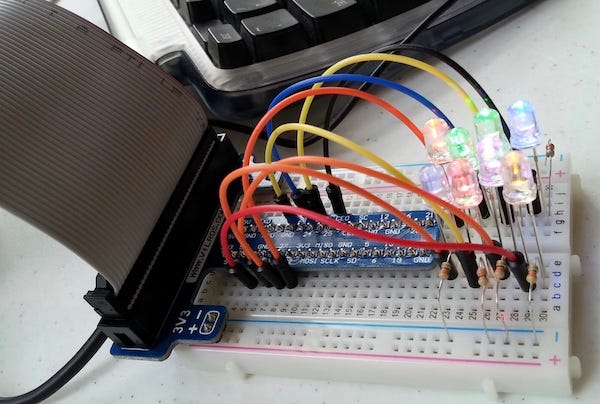
The Home Lab Kid: Maybe has a 3.5 GPA. Their garage is a mess. They run a Linux server in their closet to block ads on the home WiFi. They 3D printed a replacement part for the dishwasher because their mom was mad it broke.
The Reality: When the printer jams, they take it apart. They Google the error code. They fix it.
Hiring Managers (and top Engineering Colleges) are desperate for the Home Lab Kid.
The “Holy Trinity” of Hard Skills
If you want your student to stand out in a stack of 150 resumes, stop worrying about raising their GPA from a 3.9 to a 4.0. instead, make sure they have these three skills before they graduate high school:
1. Version Control (Git) School teaches you to save files as Final_Project_v2.docx. Real engineering requires Git. It shows you know how to collaborate, how to track changes, and how to fix mistakes without deleting everything. More importantly, if something breaks somehow, you will know how to get back to the very previous working state quickly so it will start working again with minimal impact to end users. A high schooler with a GitHub profile full of “green squares” (activity) is instantly in the top 1% of applicants.
2. The Command Line (Linux) We live in a point-and-click world. Engineers live in the text-based world. If your student can navigate a computer using the Terminal, they understand the “plumbing” of the machine. It’s a superpower.
3. Physical Troubleshooting (CAD/Hardware) Software is forgiving. Hardware is not. If your student designs a part in Fusion 360 and prints it, and it doesn’t fit, they learn a physics lesson that no textbook can teach.
The Challenge: Build, Don’t Join
My advice to parents this week: Stop looking for a “Program” for your child to join.
Instead, find a problem in your house and ask them to solve it.
WiFi spotty? Ask them to build a signal extender.
Dog eating too fast? Ask them to build an automated feeder.
Porch pirate worries? Ask them to code a motion-detected camera.
That messy, frustrating, “I-don’t-know-what-I’m-doing” project is worth more than any summer camp certificate.
It’s how they pass the Toyota Test.
Need ideas for projects? I compiled a list of 50 “Home Lab” Project Ideas (including the “Holy Trinity” skills) in my High School CS Toolkit. It’s the exact roadmap my three children used to land internships at companies like Atlassian and Roblox before they even graduated.